ServicesWater Softeners
Water Softeners in Dade City
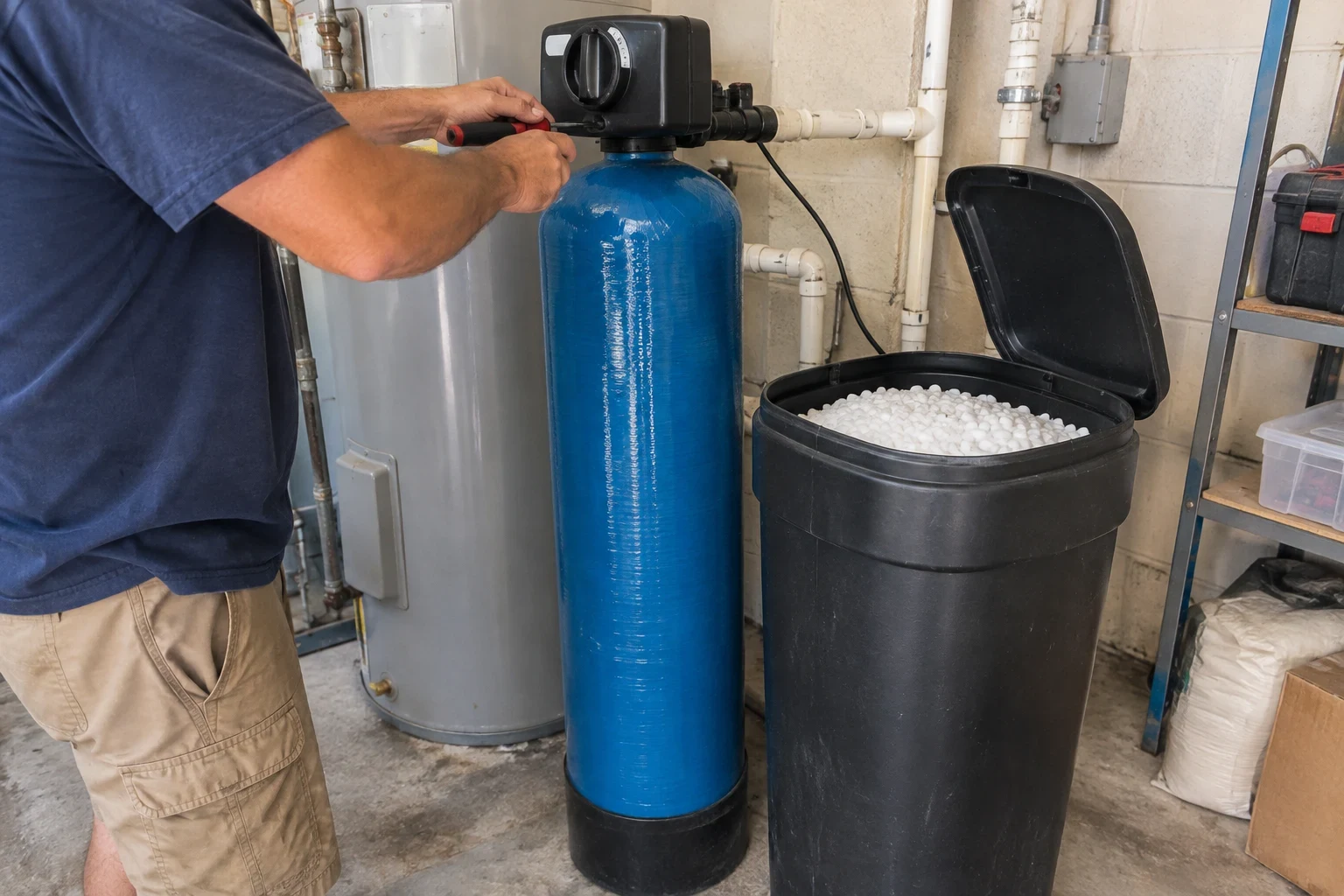
Hardness minerals leave chalky rings around faucets, cloud your glassware and coat the inside of your water heater. We fit a softener to the size of your household, connect it neatly to your plumbing and show you how to keep it working well.
What a softener does, and when it makes sense
A softener holds a tank packed with small resin beads. As your water passes through, the beads grab calcium and magnesium and release sodium or potassium in their place. Those two minerals cause the scale on showerheads, the crust inside tank and tankless water heaters and the cloudy film on glass shower doors. With them removed, soap lathers better, fixtures stay cleaner and your water heater keeps working efficiently for longer.
Much of the water around Dade City moves through limestone before it reaches your faucet, collecting hardness minerals as it goes. That still does not mean every home needs a softener. If chlorine taste or odor is your main complaint, our whole-home filtration or chlorine and chloramine removal service is the better fit. We would rather point you to the system that fixes your actual problem than put in one you will hardly notice.
What comes with a softener installation
Sized for your household
We choose the resin tank by looking at the number of people under your roof, your bathroom count and the hardness of your water. Too small a unit regenerates constantly and eats through salt. Too large a unit can let water sit in the resin longer than it should.
Bypass valve and tight connections
Every system comes with a bypass valve, so you can isolate the softener and keep water flowing to the rest of your home. We tie into your main line or an existing loop and check each fitting for drips before we leave.
Proper drain line with an air gap
Water from each regeneration cycle runs to an appropriate drain through an air gap, so wastewater can never siphon back into the system.
Brine tank and first load
We position the brine tank, add the first bags of salt or potassium and set the control head to match your hardness and family size.
Showing you the basics
Before we go, we show you how to check the salt level, flip the bypass and read the display. The boxes and leftover pipe pieces leave with us.
Signs your home could use a softener
- Chalky buildup on fixtures
- The white crust on aerators, showerheads and the tub spout is mineral scale. You can scrub it away, but within a few weeks it returns.
- Cloudy glasses and dishes
- When glasses come out of the dishwasher with a dull haze, minerals are usually drying onto them.
- Soap that barely foams
- Hard water fights soap and shampoo. You end up using extra and your skin and hair can still feel coated afterward.
- Water heater trouble
- Popping or rumbling from a tank heater often points to mineral sediment settled on the bottom. Tankless units may throw error codes linked to scale.
- Rough, faded laundry
- Stiff towels and colors that dull too soon can both trace back to minerals caught in the fibers.
How a softener install goes
- 1
Start with a phone call
Tell us about the buildup or other trouble you have seen and how many people live in your home. If you have a hardness number from your utility or an older report, keep it nearby, since it helps us size the system.
- 2
Checking your plumbing
We locate where your main line enters, look for an existing softener loop, find the nearest drain and measure the space both tanks will need.
- 3
The day of the install
Most installs take just a portion of the day. We turn your water off only for the stretch when we are cutting pipe and making connections, and we lay down floor protection where we work.
- 4
Setup and handoff
We set the regeneration schedule, run one complete cycle, check for leaks and walk you through easy upkeep. After that, our ongoing customer support for maintenance, filter replacements, and service needs is a phone call away.
What sets the cost of your softener
Softener pricing depends on your home and the people living in it, so one number would not be honest. Two things move it most: how big the system needs to be and how much plumbing it takes to tie it in. We go over each part with you by phone before any work is booked.
- Resin capacity and control valve
- A bigger household needs more resin to keep up. A metered valve, which regenerates based on how much water you have actually used, costs more at the start but tends to go through less salt.
- Softener loop or new pipe
- If your home was built with a softener loop, the hookup is simpler. If not, we run new pipe to the main line, and that extra time and material shows up in the estimate.
- Garage or outdoor location
- Many homes in this area put the softener in the garage. An outdoor spot calls for a cover so sun and rain stay off the control head.
- Adding other equipment
- Pairing the softener with a carbon filter for chlorine, or treating iron on a private well, widens the job. Our well water treatment page covers that work.
Water softener questions
- Will softened water taste salty?
- Most people never pick up on it. The sodium a softener adds rises and falls with how hard your water was to begin with. If you want drinking water with almost nothing dissolved in it, an under-sink reverse osmosis system pairs nicely with a softener.
- Does a softener remove chlorine?
- No. Its only job is pulling out calcium and magnesium. If the taste or smell of chlorine is what bugs you, our chlorine and chloramine removal or whole-home filtration systems can be installed right beside the softener.
- How often do I add salt?
- It depends on your water's hardness and how much your family uses, but a quick look in the brine tank about once a month is a smart routine. In a humid Florida garage, salt can harden into a crust called a bridge. Pushing a broom handle down through the salt now and then breaks it up.
- Can I use potassium instead of salt?
- Yes. Most softeners run fine on potassium chloride, and it keeps sodium out of the discharge water. The bags are pricier than salt, and the controls may need a small adjustment, which we can handle while we install.
- What if my home is on a septic system?
- Lots of homes on septic use softeners with no issues. A properly sized unit with a metered valve keeps regeneration water to a minimum. We will talk through your specific setup on the phone.
- I already have an old softener. Should I replace it?
- Maybe not. New resin or a repaired valve can give an aging unit plenty more life. That work falls under our water softener repair and maintenance service, and if replacement is the better call, we will tell you why.
Let's put an end to the scale
Give us a quick picture of the buildup you are dealing with and the size of your household. We will tell you honestly whether a softener is worth it and what installing one would take.