ServicesChlorine & Chloramine Removal
Chlorine & Chloramine Removal in Dade City
If your tap water smells like a swimming pool or your coffee tastes a little off, the disinfectant is usually the reason. We install carbon systems that take chlorine or chloramine out at the point it enters your home, so every faucet and shower runs cleaner.
Why Disinfectant Removal Is Worth Doing
Water utilities add chlorine or chloramine to keep water safe on its long trip through the pipes. That is a good thing. It also leaves a taste and odor many people would rather not drink, cook with or shower in.
The two chemicals behave differently. Plain chlorine comes out fairly easily with standard activated carbon. Chloramine, which is chlorine combined with ammonia, holds on longer and needs catalytic carbon and more contact time to remove well. Before we recommend anything, we help you find out which one your utility uses, usually by reading its annual water quality report together. The answer decides the media, the tank size and how often it needs attention.
If your home is on a private well instead, disinfectant is rarely the issue, and our well water treatment page is the better place to start.
What the Work Includes
Matching media to your disinfectant
Standard activated carbon for chlorine, catalytic carbon for chloramine. Putting the wrong media in is the most common reason a filter seems to stop working after a few months.
Sizing for real household flow
We size the tank by the number of bathrooms and people, not a one-size guess. Carbon needs contact time, and a tank that is too small lets disinfectant slip through when two showers and the washer run at once.
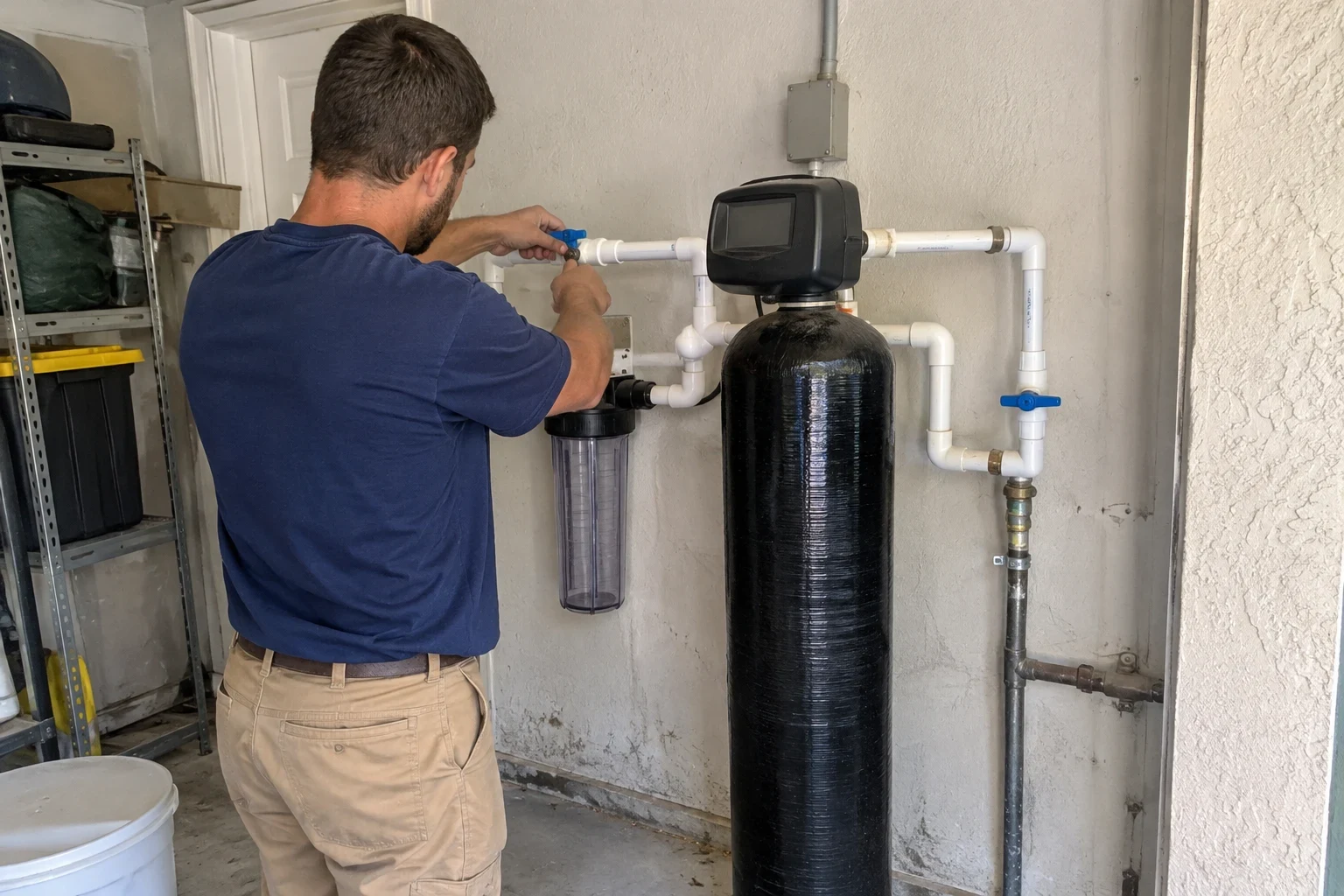
Point-of-entry installation
The system goes on the main line where water enters your home, with a bypass valve so you can keep water flowing if service is ever needed. In many Florida homes that means a garage wall or a protected spot outside on a pad, shaded from direct afternoon sun.
Optional drinking water stage
Some families add an under-sink reverse osmosis unit for cooking and drinking. We explain when it adds real value and when the whole-home carbon alone covers what you want.
Cleanup and a walkthrough
We flush the new media, check every fitting for leaks, clean up the work area and show you how the bypass works before we leave.
Signs Your Water Needs Chlorine or Chloramine Removal
- A pool smell at the faucet
- The odor is strongest from hot water and in a closed shower. Many people notice it most first thing in the morning.
- Coffee, tea or ice tastes flat
- Disinfectant changes the flavor of anything you brew. Ice cubes often pick it up too.
- Dry skin and itchy scalp after showers
- Warm water opens pores and releases more chlorine into the air. Some people with sensitive skin notice a difference once it is removed.
- A pitcher filter that cannot keep up
- Small pitcher and fridge filters help with drinking water but do nothing for showers or laundry, and the cartridges add up.
- Fish or plants reacting to tap water
- Chloramine is harmful to aquarium fish and does not gas off by letting water sit out. If you keep an aquarium, this matters.
- Worn rubber parts in fixtures
- Chloramine can be hard on some rubber washers, flappers and seals over time, which shows up as running toilets and dripping valves.
How Your Installation Day Goes
- 1
A phone conversation first
We start by hearing what you notice at the tap, how big your household is and how many bathrooms you have. If your utility's water quality report is close by, we read through it together.
- 2
A clear recommendation
We tell you which media fits, what size tank makes sense and whether anything else is worth adding. If a pitcher filter or a single under-sink unit would do the job, we say so.
- 3
Installation
The typical job wraps up in a few hours rather than a full day. You lose water just for the stretch when we open the main line to tie in the system, and we lay down floor covers and protect the area around the work.
- 4
Flush, check and explain
We rinse the new carbon until the water runs clear, test fittings under pressure and show you the bypass and any maintenance schedule.
What Shapes the Cost
Every home is set up a little differently, so we give you a written, line-item quote once we understand yours. A handful of things decide the price, and we walk you through each one before any work begins.
- Which disinfectant your utility adds
- Removing chloramine calls for catalytic carbon, which is a pricier media than the standard carbon that handles plain chlorine. Chloramine systems also tend to need a larger tank, because the water has to sit against the media a little longer to come out clean.
- Household size and flow
- More bathrooms and more people call for a bigger tank that can keep up when everyone is getting ready at once.
- Location of the main line
- A main line that sits exposed on a garage wall takes less labor to tie into. If the line has to be rerouted, or the system needs an outdoor enclosure, the job takes longer. Any permit your project calls for is included in the quote.
- Add-ons you choose
- A drinking water stage, a sediment prefilter or a softener combination each add to the total. None of them are required.
Questions About Chlorine and Chloramine Removal
- How do I know if my water has chlorine or chloramine?
- Your water utility puts out a yearly water quality report, and it names the disinfectant in use. We are happy to read it with you over the phone. When the report is unclear, we usually suggest catalytic carbon, because it takes care of either one.
- Will removing chlorine make my water unsafe?
- The disinfectant does its job while water travels through the utility's pipes to your home. Taking it out where the line enters your house, with the water used soon after, is a common and accepted approach. We set the system up so the water at your taps stays fresh instead of sitting idle for long periods.
- Do I need a whole-home system or just a filter under the sink?
- If the taste of your drinking water is the only thing bothering you, one under-sink unit may cover it. If you also notice the smell in the shower, feel it on your skin or see it in the laundry, whole-home filtration makes more sense. We will give you a straight answer based on what you tell us.
- How long does the carbon last before it needs a change?
- It depends on how much water your household uses and which disinfectant comes through the line. Chloramine wears carbon out sooner than plain chlorine does. After installation we give you a replacement timeline you can actually plan around, and we stay with you afterward for upkeep, new filters and any service the system needs down the road.
- Do you work outside Dade City?
- Yes. We work with homeowners in Dade City and nearby communities including Zephyrhills, Wesley Chapel and Ridge Manor. Our Service Areas page lists the rest.
Ready for Water That Just Tastes Like Water
Tell us what you notice at the tap and in the shower. We will help you sort out which disinfectant your utility uses and what it takes to remove it from your home.