Are There Any Downsides to Water Softeners for a Dade City Home?
A softener solves hard water well, but it comes with trade-offs you should know about before one goes in your garage.
Are there any downsides to water softeners?
Yes, water softeners have real downsides: added sodium, ongoing salt, regular upkeep, wastewater from regeneration, and the simple fact that they don't filter out chlorine, odors or most contaminants. None of these are deal breakers for most homes. They just need planning. We're happy to talk it through at (352) 558-3706.
What a softener does, and what it doesn't
A water softener swaps hardness minerals, mostly calcium and magnesium, for sodium or potassium as water passes through a tank of resin beads. That stops the white crust on faucets, the spots on glass shower doors and the scale that builds up inside water heaters. It does that one job very well.
What it doesn't do is clean your water in the broader sense. A softener won't take out chlorine taste, sulfur smell, sediment or bacteria. Many homeowners are surprised by this after install, so it's worth knowing up front. If taste or odor is your main complaint, whole-home filtration or chlorine and chloramine removal may matter more than softening, and some homes need both.
The everyday trade-offs you'll notice
Most of the downsides show up in daily life rather than in a single big problem. Here's what owners tell us they had to get used to.
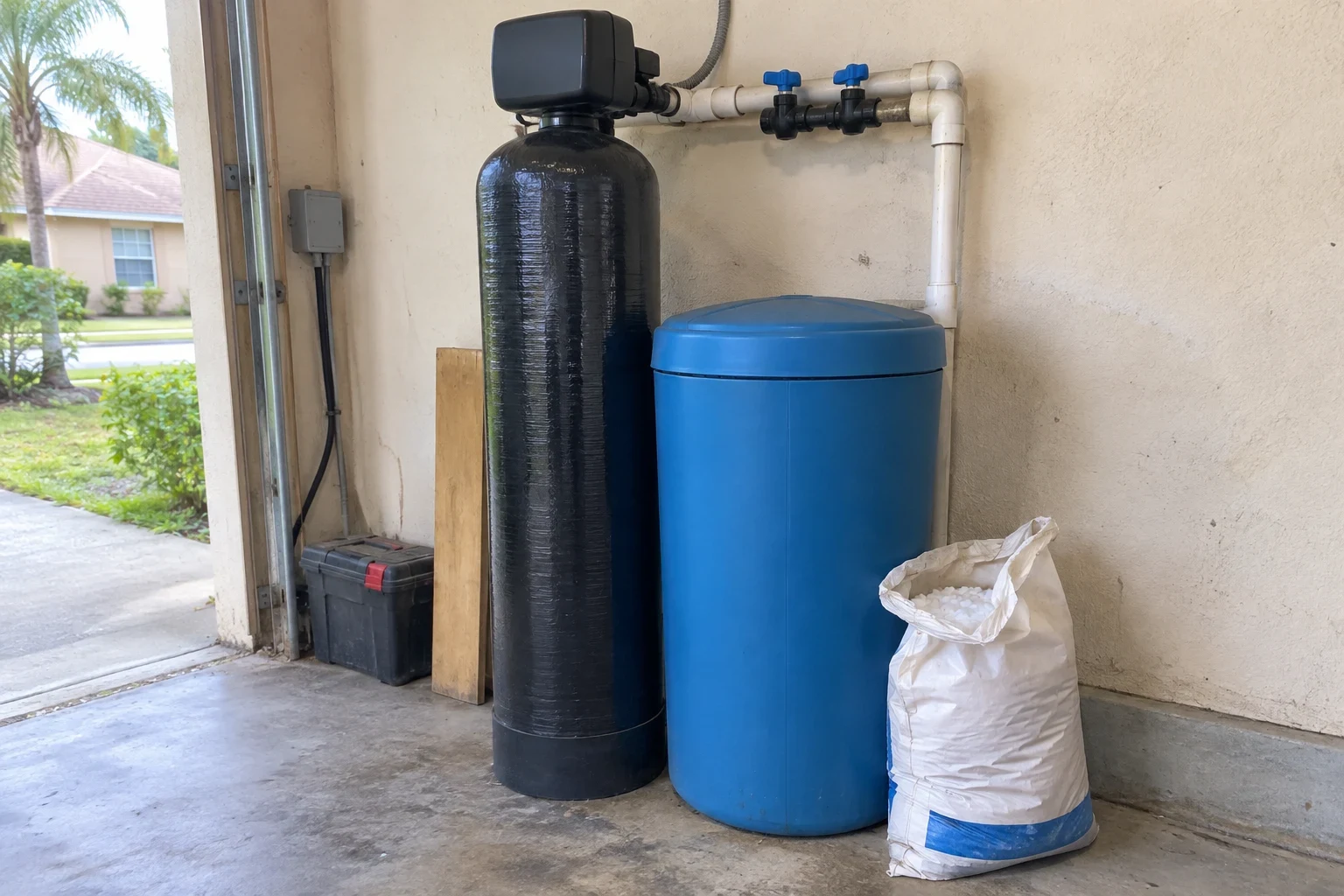
- Salt bags. You'll lift and pour a 40-pound bag into the brine tank every so often, depending on how much water your home uses and how hard it is.
- A slippery feel. Soft water rinses soap differently, so skin can feel slick after a shower. It's not leftover soap, but it takes a few weeks to stop noticing.
- Floor space. A softener and its brine tank need a spot near where the water line enters, usually the garage or a utility closet, plus a drain and an outlet.
- Plants and lawns. Softened water isn't great for watering, so outdoor spigots and irrigation are normally left on the unsoftened side.
Sodium, septic and wastewater
Softened water carries a small amount of added sodium. For most people it's minor next to what's in food, but if someone in your home is on a low-sodium diet, ask their doctor. Two easy fixes: run the softener on potassium chloride instead of salt, or put a reverse osmosis system at the kitchen sink for drinking and cooking water.
Every regeneration cycle flushes brine and rinse water down the drain. Plenty of homes around Dade City and out toward Ridge Manor are on septic systems, and owners reasonably ask whether that brine is a problem. A properly sized softener that regenerates based on actual water use, rather than on a fixed timer, keeps the discharge down. We size and set the unit with that in mind, and we route the drain line to the right spot instead of guessing.
If you prefer not to discharge brine at all, that's a fair preference to share when we talk. It changes which equipment makes sense.
Upkeep, humidity and iron
Softeners aren't set-and-forget. Our Florida humidity is a quiet troublemaker here: damp salt can fuse into a hard crust called a salt bridge, so the brine tank looks full while the water underneath isn't getting salty. The softener keeps running but stops softening. A quick poke with a broom handle every few months usually catches it.
Well water adds another wrinkle. Iron and sulfur are common in private wells, and iron can coat the resin beads and cut a softener's life short. On a well, the softener often works best behind the right pre-treatment, which is where well water treatment comes in. Resin and valves also wear out over the years, and an older unit may cycle too often, waste salt or leak.
None of this is hard to manage once you know about it. We offer ongoing customer support for maintenance, filter replacements, and service needs, so you're not left guessing when something seems off. For older systems, water softener repair and maintenance can often get another few good years out of the unit before replacement is worth discussing.
- Check the salt level monthly and break up any crust.
- Use clean pellet salt rather than rock salt to cut down on sludge in the tank.
- Watch for spots coming back on dishes, which often means the softener has stopped doing its job.
- Listen for the unit regenerating far more often than it used to.
So is a softener still worth it?
For a lot of homes, yes. Scale is hard on water heaters, dishwashers and fixtures, and much of the water in this part of Pasco County comes up through limestone, which is where hardness comes from. A softener that's sized right and set up properly usually pays you back in fewer spots, less scrubbing and appliances that aren't fighting buildup.
The honest answer is that it depends on your water and your household. A softener makes the most sense when you can see the scale yourself. If your real complaint is taste, smell or staining, we'll say so, and point you toward the system that actually fixes it.
More questions about softener drawbacks
- Will soft water damage my pipes?
- Properly softened water isn't harmful to typical home plumbing. Problems tend to come from a unit that's set wrong or regenerating poorly, which is something a service visit can sort out.
- Can I drink softened water?
- Most people can. If you'd rather avoid the added sodium, a reverse osmosis faucet at the kitchen sink gives you separate drinking and cooking water.
- Do I need to shut off water during installation?
- Yes, for part of the visit. We plan the shutoff so you know when it's coming, and the rest of the day your home works as normal.
- Does a softener need electricity?
- Most modern units use a small amount of power to run the control valve and track water use. We'll make sure there's an outlet near where the softener will sit.
Talk through whether a softener fits your home
Give us a call and tell us what you're seeing, whether it's spots, scale, odor or an old unit that's acting up. We'll walk you through the trade-offs for your home and the option that makes sense.